
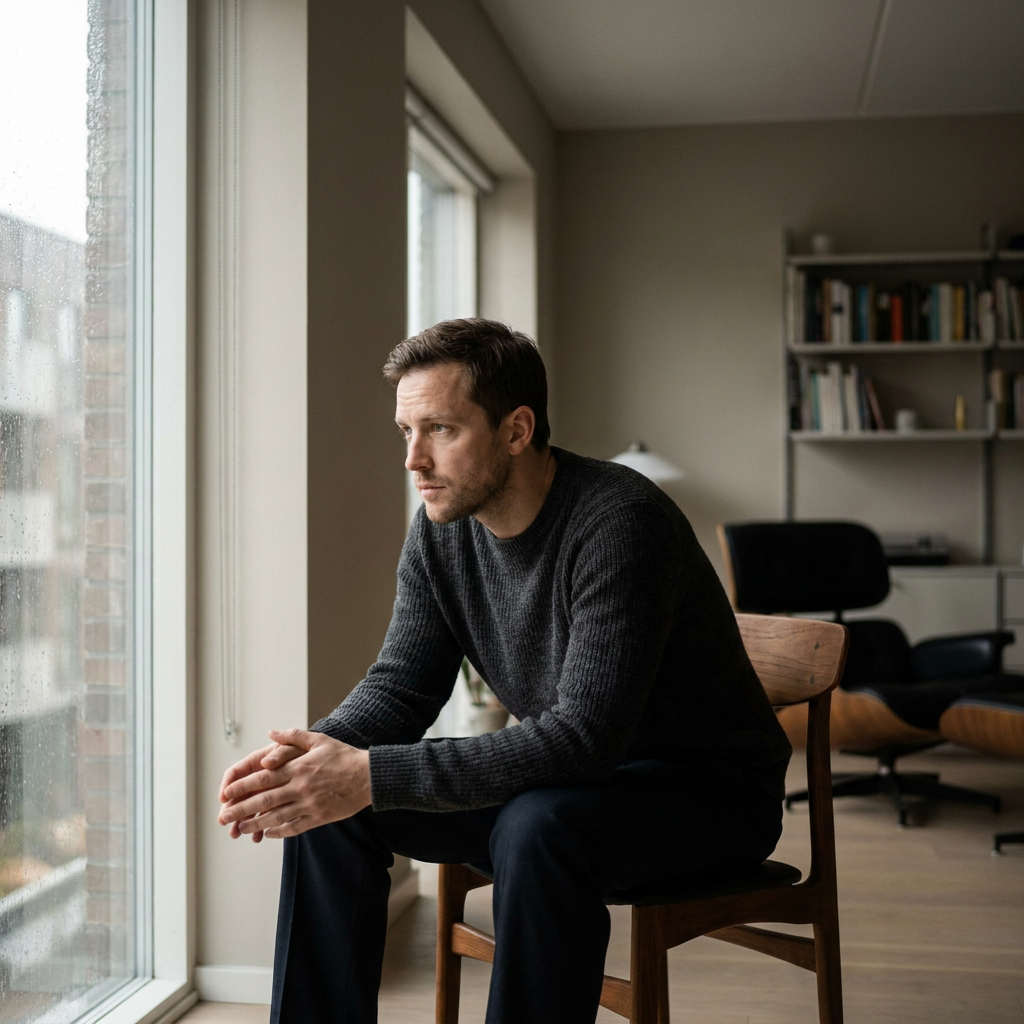
Attachment styles in men

Attachment style shapes how you handle closeness, conflict, reassurance, distance, and honesty. If you keep replaying the same relationship story, this is one of the smartest places to look. It isn’t a life sentence—it’s a pattern you can change with awareness and practice. This guide shows how the four styles show up in men, how they affect dating, conflict, and breakups, and how to grow more secure. Curious how this intersects with polarity? See attachment styles vs polarity.
Table of contents
- 1Why attachment matters more than most men think
- 2The 4 attachment styles in men at a glance
- 2.1Secure attachment in men
- 2.2Anxious attachment in men
- 2.3Avoidant attachment in men
- 2.4Fearful-avoidant attachment in men
- 3Why many men seem avoidant
- 4How attachment patterns affect dating, conflict and breakups
- 5How a man builds secure attachment
- 6If you keep repeating the same relationship pattern
- Show more...
Key takeaways
- Attachment style drives how men handle closeness, conflict, reassurance, and distance.
- Anxious overthinks and chases; avoidant withdraws; fearful-avoidant swings; secure stays steady.
- Social conditioning can make men look avoidant even when that’s not their true pattern.
- Becoming secure: pause, separate feelings from facts, ask directly, and build a fuller life.
- Patterns can change with honesty, practice, consistency, and the right support.
Why attachment matters more than most men think
Attachment style is the emotional strategy you learned around safety, connection, and need. For men, it often hides behind socially accepted behaviors: staying busy, acting unaffected, needing constant validation, shutting down during conflict, or calling emotional distance “independence.” The pattern is still there, even if it looks masculine on the surface.
That is why attachment styles in men are often missed. A man may look strong, competent, and self-contained, yet still panic when intimacy deepens. Another man may look confident in dating, but spiral when a woman pulls back for one day. Neither pattern is random. Both usually point to learned relationship wiring from early experiences and reinforced by later relationships.
The 4 attachment styles in men at a glance
| Style | Core fear | How it often shows up in men | Main growth edge |
|---|---|---|---|
| Secure | Losing connection without losing self | Consistent, honest, emotionally steady | Keep practicing openness and clear boundaries |
| Anxious | Abandonment | Overthinking, reassurance-seeking, chasing mixed signals | Build self-trust and regulate fear before reacting |
| Avoidant | Engulfment or loss of freedom | Pulling away, minimizing needs, emotional distance | Stay present when intimacy feels uncomfortable |
| Fearful-avoidant | Being hurt and being alone | Hot-and-cold behavior, craving love but distrusting it | Create safety through honesty, support, and consistency |
Secure attachment in men
A securely attached man can want closeness without becoming dependent on it. He does not need to perform indifference to feel strong. He communicates directly, recovers from conflict faster, and does not collapse because a woman has a boundary or a busy day. Secure men still feel fear, disappointment, and jealousy sometimes. The difference is that they do not let those emotions run the entire relationship. They stay grounded enough to talk, listen, and repair.
Anxious attachment in men
Men with anxious attachment often look intense, hyper-focused, or emotionally all-in very quickly. Underneath that is usually fear of being left, replaced, or not chosen. He may overanalyze texts, need frequent reassurance, feel thrown off by emotional distance, or attach hard to inconsistent women. He can also become jealous, people-pleasing, or overly accommodating just to keep connection alive. The deeper issue is not “too much emotion.” It is a lack of inner safety. Until that changes, love can feel like a constant test he is scared to fail. For a deeper dive into signs and patterns, see anxious attachment in men.
Understand True Masculinity
Avoidant attachment in men
A man with avoidant attachment often values control, space, and self-reliance above emotional closeness. He may come across as calm and independent, but when intimacy gets real, he distances, delays commitment, shuts down, or becomes hard to reach. This includes the dismissive-avoidant attachment in men subtype many people talk about in dating. He may enjoy connection right up until vulnerability is required. After conflict or even after a breakup, he can seem cold or relieved at first because distance feels safer. The emotional impact often catches up later, once the pressure is gone and the numbness wears off. For more on how this shows up, see avoidant attachment in men.
Fearful-avoidant attachment in men
A fearful-avoidant man wants love and fears it at the same time. He may pursue intensely, then disappear. He may open up one day and become defensive the next. This pattern is often the most confusing because both hunger for closeness and fear of being hurt are active at once. Men with this style can struggle with trust, shame, emotional swings, and self-sabotage. They may assume rejection is coming, then behave in ways that create exactly what they fear. Without real self-awareness, this pattern can turn relationships into chaos. For a focused guide on patterns and healing steps, see fearful-avoidant attachment in men.
Why many men seem avoidant
There is no single attachment style that “most men have.” But many men are socialized to look more avoidant than they really are. They are taught to stay composed, solve problems alone, hide need, and equate vulnerability with weakness. That training can produce emotional distance even in men who actually crave deep connection.
So when people ask, “What attachment style do most men have?” the honest answer is this: not all men are avoidant, but many men have learned avoidant behaviors. Some are truly avoidant. Others are anxious underneath and use distance as armor. Others simply never learned the language for intimacy. If you want truth, do not judge only by surface behavior. Look at what happens when closeness, conflict, disappointment, or commitment enters the room.
How attachment patterns affect dating, conflict and breakups
In dating, attachment style shows up fast. An anxious man may chase clarity too early, read meaning into every delay, or mistake inconsistency for chemistry. An avoidant man may enjoy the beginning, then pull back when expectations rise. A fearful-avoidant man may create strong attraction through intensity but struggle to sustain safety and consistency. A secure man moves slower, clearer, and with less drama.
Conflict reveals even more. Anxious attachment usually pushes for immediate reassurance. Avoidant attachment usually withdraws, goes quiet, or becomes emotionally unavailable. That anxious-avoidant loop is common because each person activates the other’s fear. One pursues harder, the other retreats faster. The same pattern can play out after a breakup. An anxious man may obsess and reach out repeatedly. An avoidant man may detach on the surface, then feel the loss later. Neither response is proof of love or strength. It is usually proof of conditioning.
How a man builds secure attachment
Secure attachment is not built by pretending to be relaxed. It is built through radical honesty, emotional clarity, and better relational habits. If you want a different result in love, you need a different way of meeting fear.
- Learn your trigger pattern. Notice what sets you off most: distance, criticism, mixed signals, lack of control, or emotional demands. If you do not know your trigger, your pattern will keep running you.
- Separate feelings from facts. Feeling rejected is not always the same as being rejected. Feeling trapped is not always the same as being controlled. This pause alone can change your behavior dramatically.
- Say what you need directly. Do not test, withdraw, punish, or perform indifference. Clear communication is more masculine than silent resentment or emotional games.
- Strengthen your life outside the relationship. Purpose, friendships, health, and standards reduce desperation and reduce emotional avoidance. Secure men do not make a relationship carry the entire weight of their identity.
- Practice staying present during discomfort. If your instinct is to chase, slow down. If your instinct is to disappear, stay in the conversation a little longer. Real change happens in those moments.
- Get support if the pattern is deep. Attachment style coaching for men can help you uncover blind spots and stop repeating destructive dating dynamics. If your history includes severe trauma or overwhelming emotional distress, licensed therapeutic support may also be appropriate.
The key point is simple: attachment style is not an excuse. It is a pattern. You are still responsible for what you do with it.
If you keep repeating the same relationship pattern
If this article hit a nerve, good. That usually means you are close to something real. SoulfulMagnet works with men who are tired of surface advice and ready to face the unconscious patterns that keep sabotaging connection. If you want deeper support, the work is not about becoming nicer, colder, or more strategic. It is about becoming more honest, more grounded, and more secure in who you are with a woman and without one.
Frequently asked questions
What attachment style do most men have?
There is no reliable rule that says most men have one specific attachment style. What is more accurate is that many men are conditioned to suppress emotion, which can make them appear avoidant. Underneath that surface, some are anxious, some are fearful-avoidant, and some are secure.
What is the unhealthiest attachment style?
No insecure style is “good,” but fearful-avoidant attachment is often the most destabilizing because it combines a strong desire for closeness with a strong fear of it. That can create intense push-pull dynamics, confusion, and self-sabotage. Still, any insecure pattern can damage relationships if it goes unexamined.
Which attachment style is hardest to love?
The hardest style to love is usually the one that refuses awareness and accountability. An anxious man can be exhausting if he needs constant reassurance. An avoidant man can be painful if he shuts down and disappears. A fearful-avoidant man can be deeply confusing if he swings between closeness and distance. The pattern matters, but willingness to grow matters more.
What are avoidant men like in bed and intimacy?
Avoidant men are not all the same, and sexual chemistry does not tell you attachment style by itself. The more revealing issue is emotional intimacy around sex. An avoidant man may be physically present but guarded before or after closeness, struggle with tenderness, or pull away when sex increases emotional bonding. The challenge is usually vulnerability, not desire alone.
Can a man change his attachment style?
Yes. Attachment style is shaped early, but it is not fixed for life. Men can become more secure through self-awareness, emotionally honest relationships, better boundaries, and consistent inner work. Change is not about learning lines or acting confident. It is about changing the pattern beneath the behavior.
Related articles

Nice Guy Syndrome Signs
Nice Guy Syndrome often looks…
Nice Guy Syndrome: Signs, Causes, and How to Break the Pattern
Nice guy syndrome is an approv…

Men’s fear of commitment
Not every man who moves slowly…